
One of the best ways to reset after eating lots of less healthy foods is to make this Chinese ginseng chicken soup recipe 花旗參雞湯. As a Canadian born Chinese, I’m so excited to be working with high quality Canadian ginseng, considered to be the most potent and powerful of all ginseng varieties.
What are the Benefits of Chinese Ginseng Chicken Soup?
Known for its holistic health benefits, Canadian ginseng is known to raise 氣 “Hei” in Cantonese or “Chi” in Mandarin, which is positive energy. 雞湯 (gai/jī tong/tāng) also known as chicken soup, is a comforting dish that brings me back to my culture. Combined with Canadian ginseng, it brings benefits for the brain, body and spirit through stimulating GABA receptors and increasing cognitive function and energy levels.
Is Chinese ginseng chicken soup heaty or cooling?
The Canadian ginseng that is used in this recipe is known to be cooling. Korean ginseng is known to be heating or energizing. Therefore, in this chicken ginseng soup made with Canadian ginseng, is perfect for when you’ve eaten lots of “heaty” or “yeet hay” foods, such as deep fried foods.
Read ahead to learn how to make this healing Chinese ginseng chicken soup that only uses 5 ingredients!
Ingredients
The ingredients in this soup and all their individual health and nutrition benefits.

Chicken

The main source of protein in this recipe. I used regular chicken drumsticks, the fat from the dark meat provides better flavor. Chinese people like to use silkie chicken for healing soups like these, but they are more expensive and harder to find. Don’t worry about using silkie chicken, regular chicken works fine.
Ginger

Fresh ginger root flavors the dish but it also has lots of health benefits. It’s anti-nausea and anti-inflammatory. Ginger also contains antioxidants and can help with symptoms such as stomach upset.
Canadian ginseng

I am using Panax Quinquefolious Ginseng aka North American Ginseng, which is native to Canada.
Canadian ginseng is known to be a relaxing agent, in Chinese we like to say it has a cooling effect on the body. A cooling effect would address something similar to what we know of as inflammation in the western world.
Asian ginseng is considered to be more energizing, or having a heating effect on the body. The primary difference between Canadian ginseng and Asian ginseng is the level of active compound in each.
Who should not take ginseng?
Ginseng is not recommended for children or pregnant or breastfeeding individuals. For individuals with diabetes, their blood sugar levels should be monitored closely when ingesting this herb.
Chinese red dates or jujubes

In traditional Chinese medicine, red dates are cited as ingredients that can treat many ailments. However, not all of the claims are backed up by scientific evidence, so I will not list them here. Nutritionally, Jujube fruits are rich in fiber, vitamins, and minerals such as vitamin C and potassium.
Taste wise, they add a sweetness and richer red-brown color to the soup. Be aware that they often contain a pit inside. You often buy them dried at the Asian grocery store.
Goji berries

Goji berries, also called wolf berries, have a bright red color. Another fruit known to have lots of nutritional benefits, they are high in vitamin C, great for immunity. Goji berries are also great for eye health, containing vitamin A and antioxidant zeaxanthin. They are also a good source of non-heme, plant-based iron.
Taste wise, they add sweet and sour taste to the soup.
A note on Chinese red dates and goji berries
Both red dates and goji berries have great nutritional benefits. But as a dietitian, keep in mind that in order to reap the rewards of them you have to eat LOTS of them, much more than you would add to the soup. But overall, these ingredients bring in nutritional benefits to a soup known for comfort and healing properties.
Salt
Salt helps bring out the flavor of the soup. It is best to taste it and then add more to adjust to your taste preferences.
How to Make Chinese Ginseng Chicken Soup: Step by Step Instructions with Photos
-

- Step 1: Submerge chicken drumsticks in a pot of cold water. Bring water to a boil for about 4-5 minutes. Rinse the boiled chicken and pot to remove the residues.
-
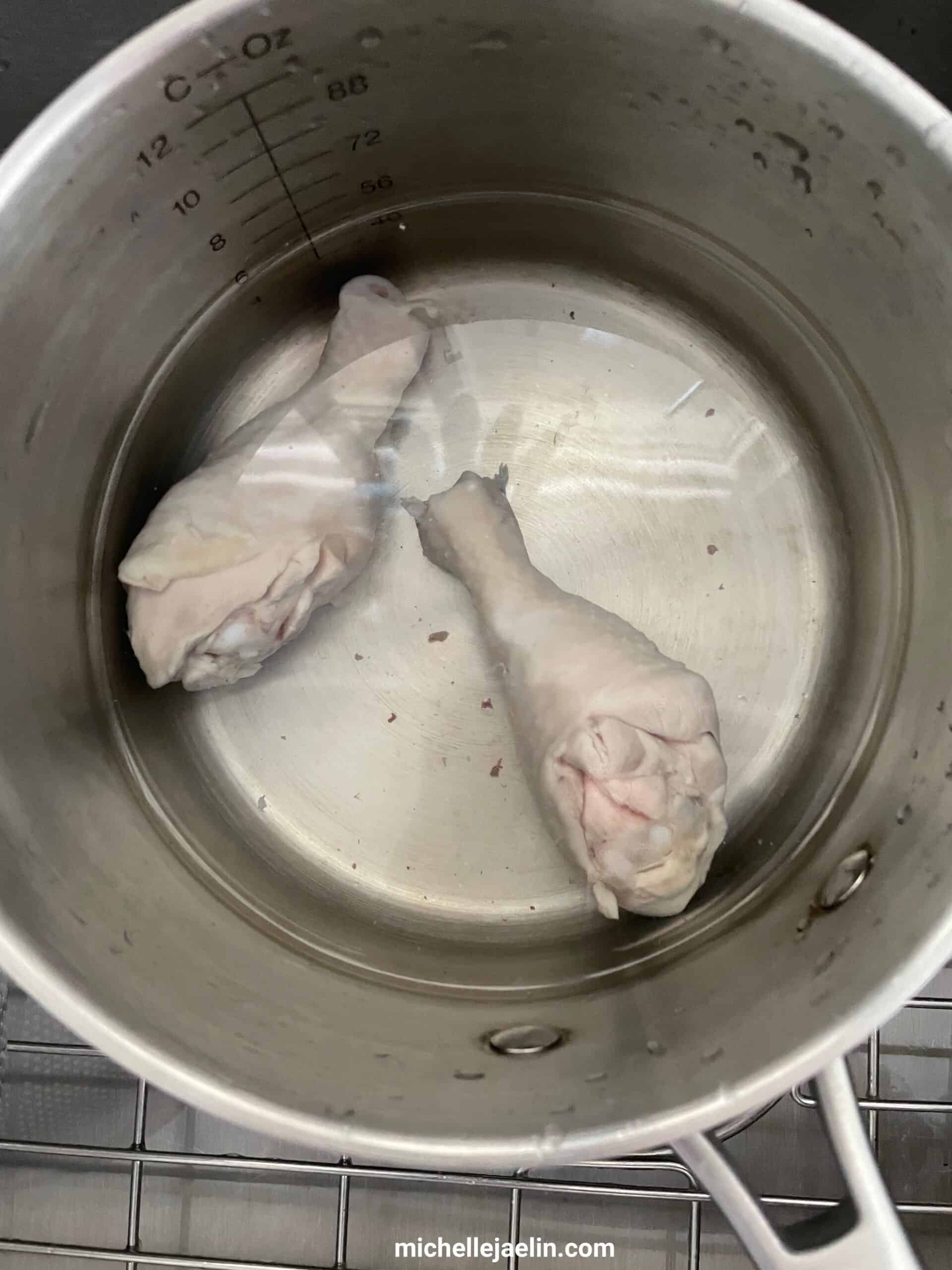
- Step 2: Add chicken back to the pot and add 6 cups of water. Turn up the heat to high to bring the soup to a boil.
-
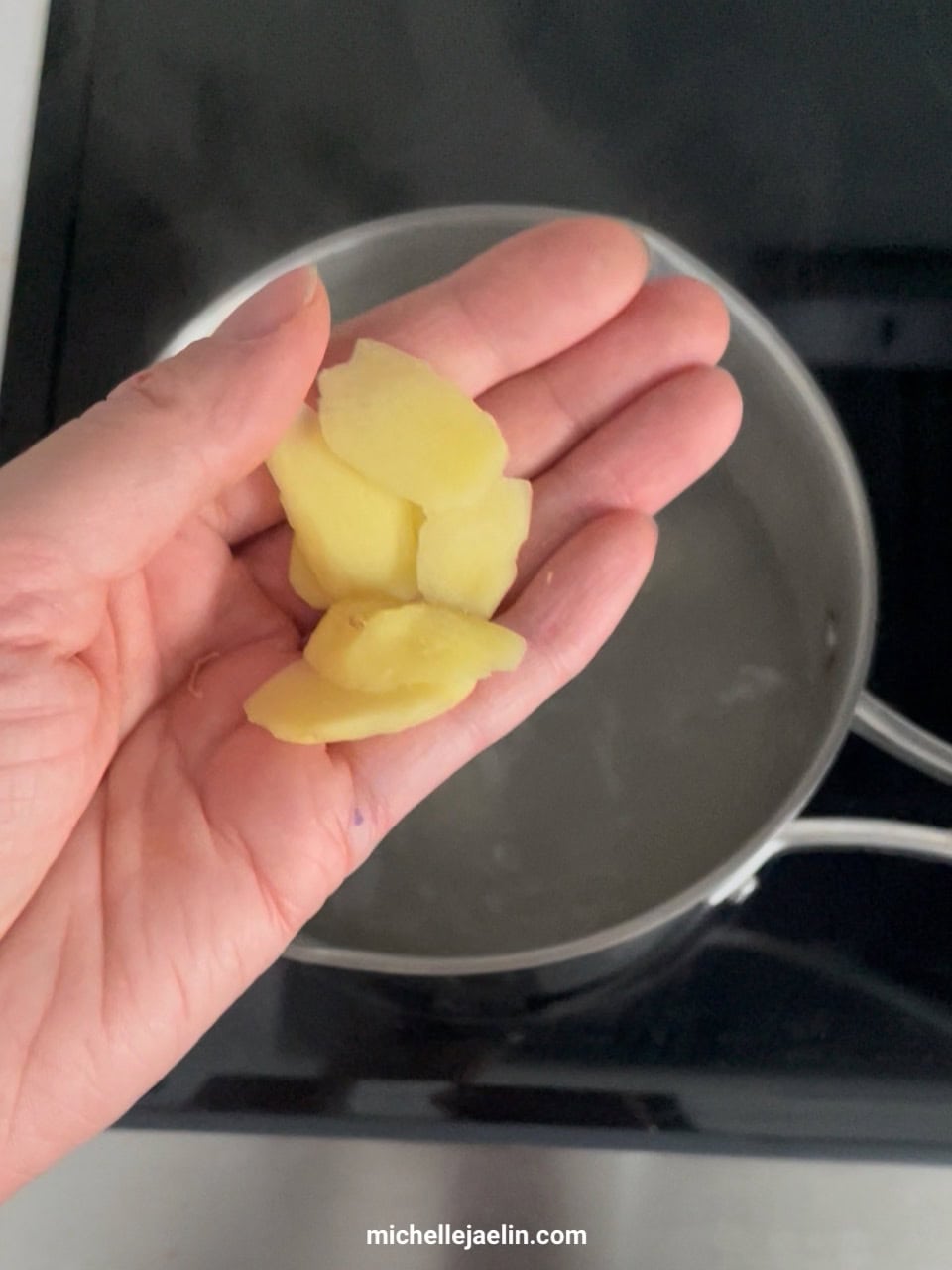
- Step 3: Add sliced ginger root pieces.
-

- Step 4: Add ginseng flakes.
-
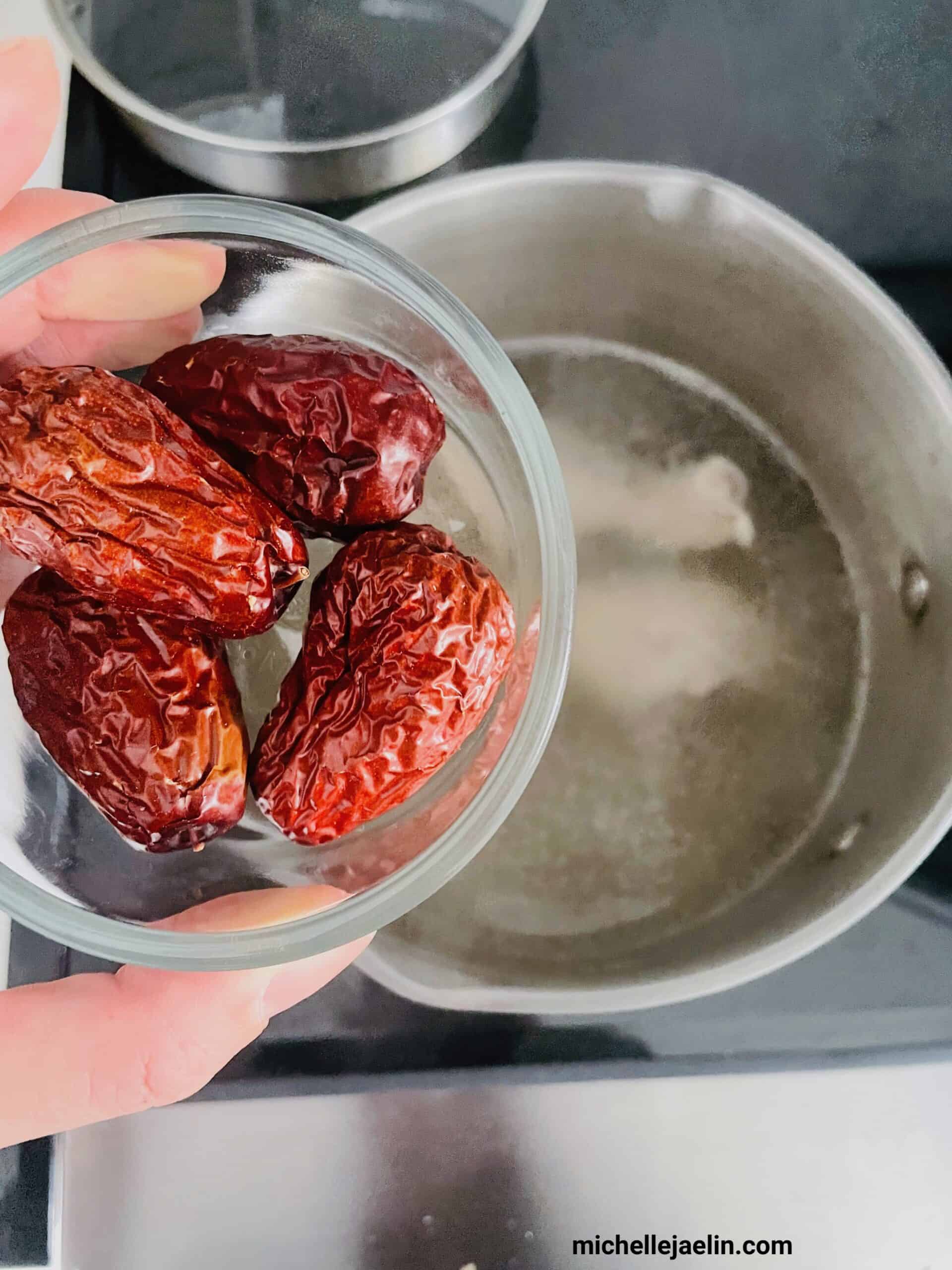
- Step 5: Add red jujubes.
-
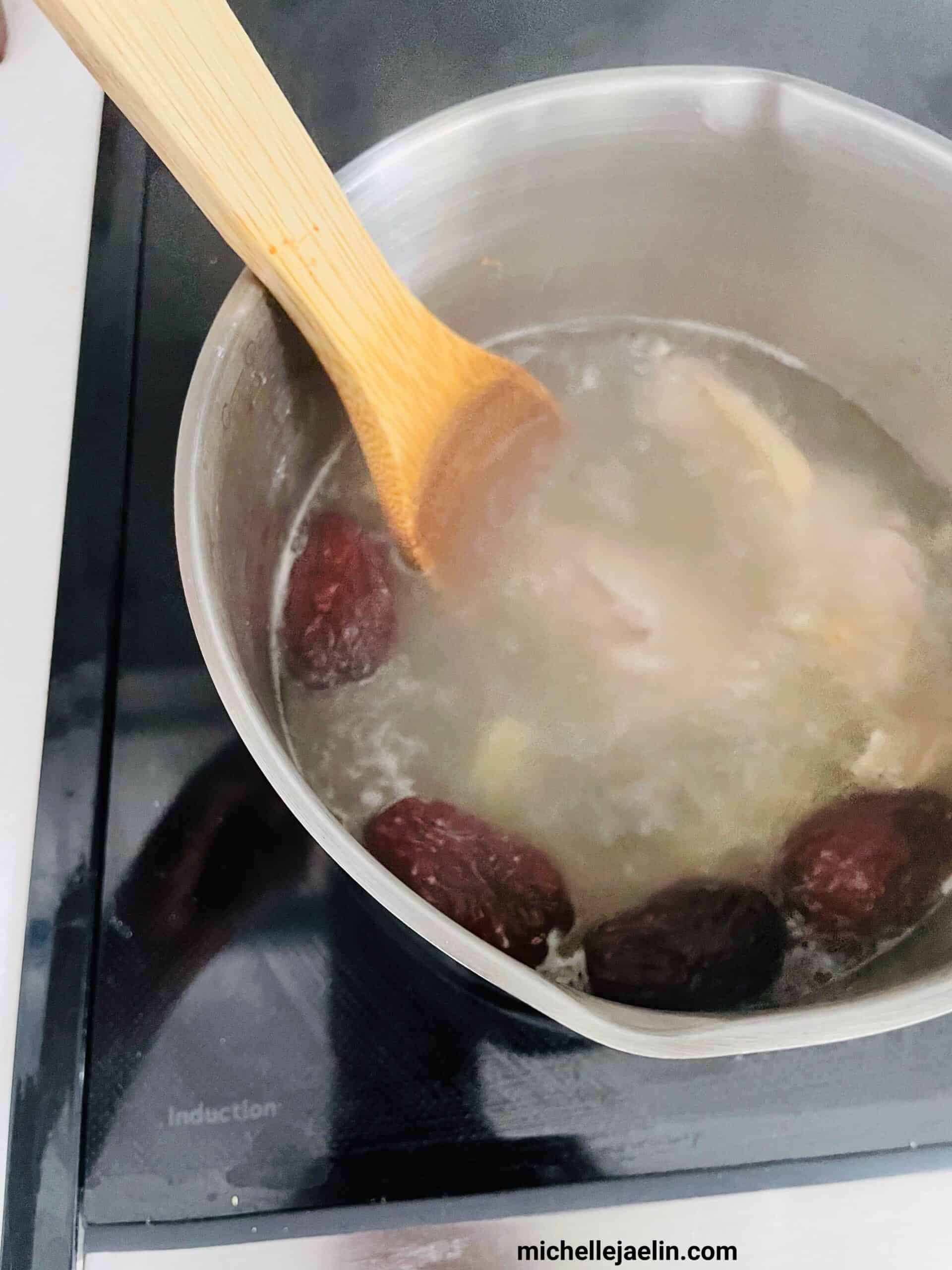
- Step 6: Once soup is boiling, turn down heat to a simmer for about 1 hour.
-
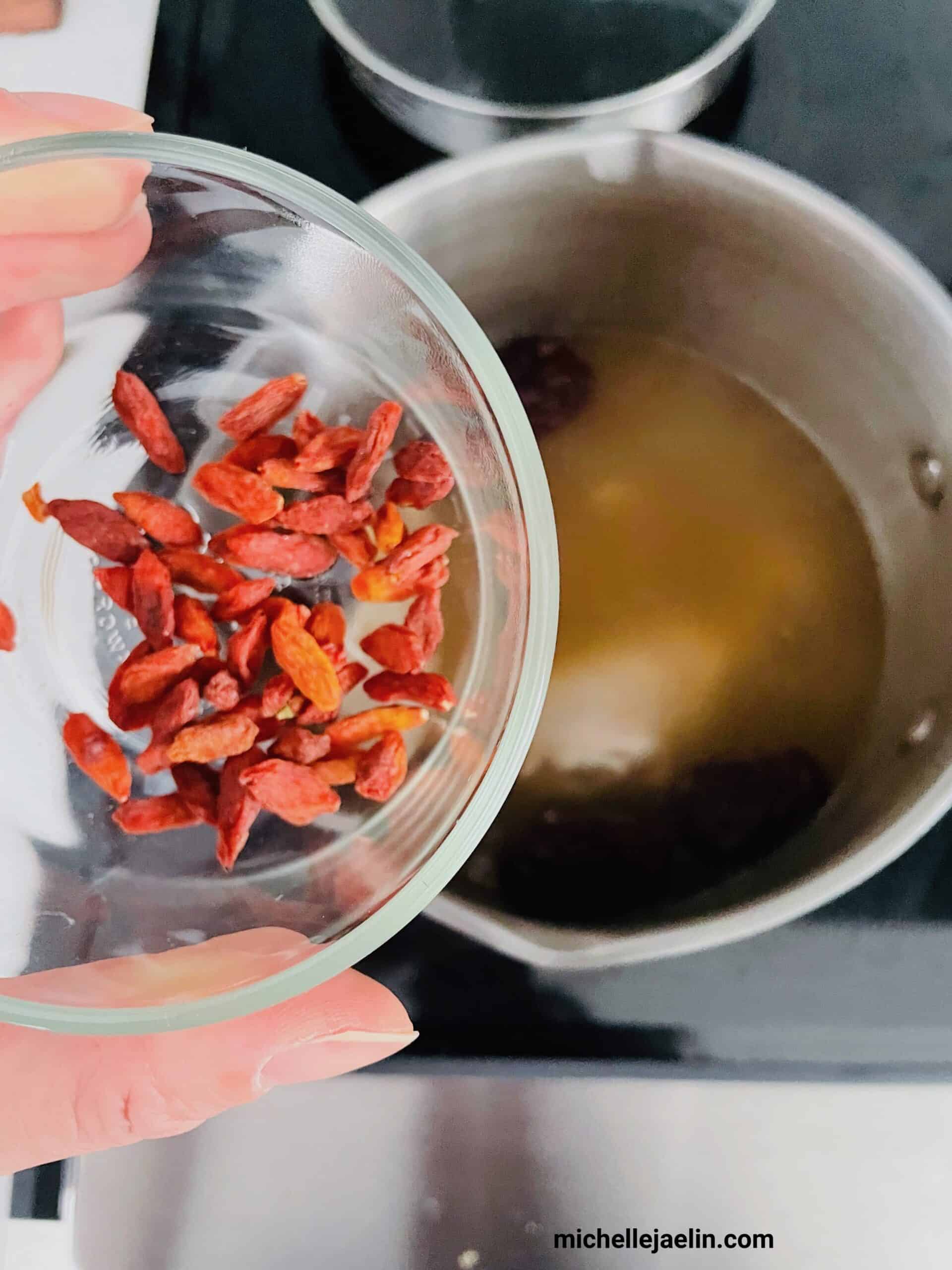
- Step 7: For the last 5 minutes of simmering time, add goji berries.
-

- Step 8: Add salt.
-
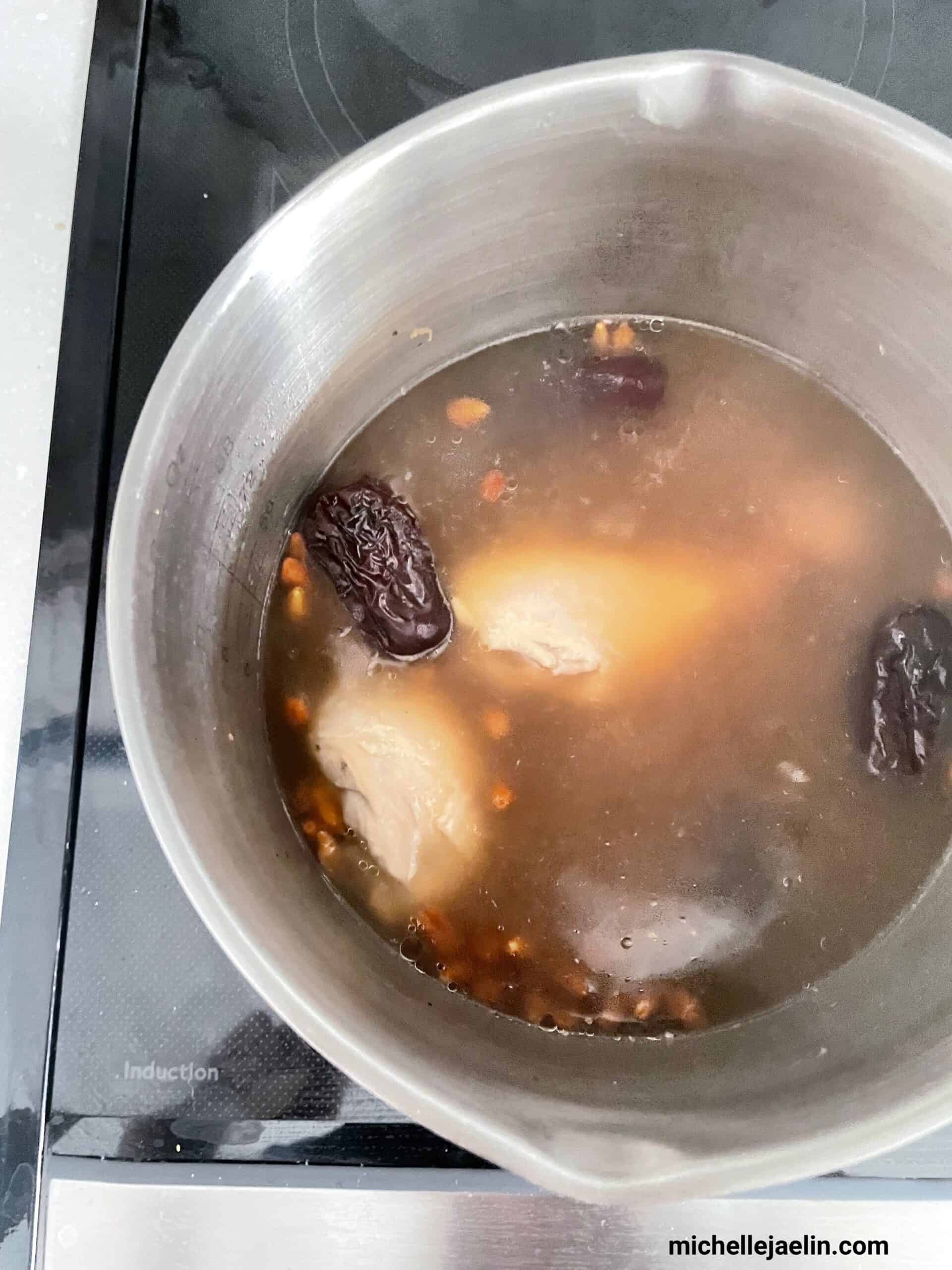
- Step 9: Simmer for 5 minutes.
-

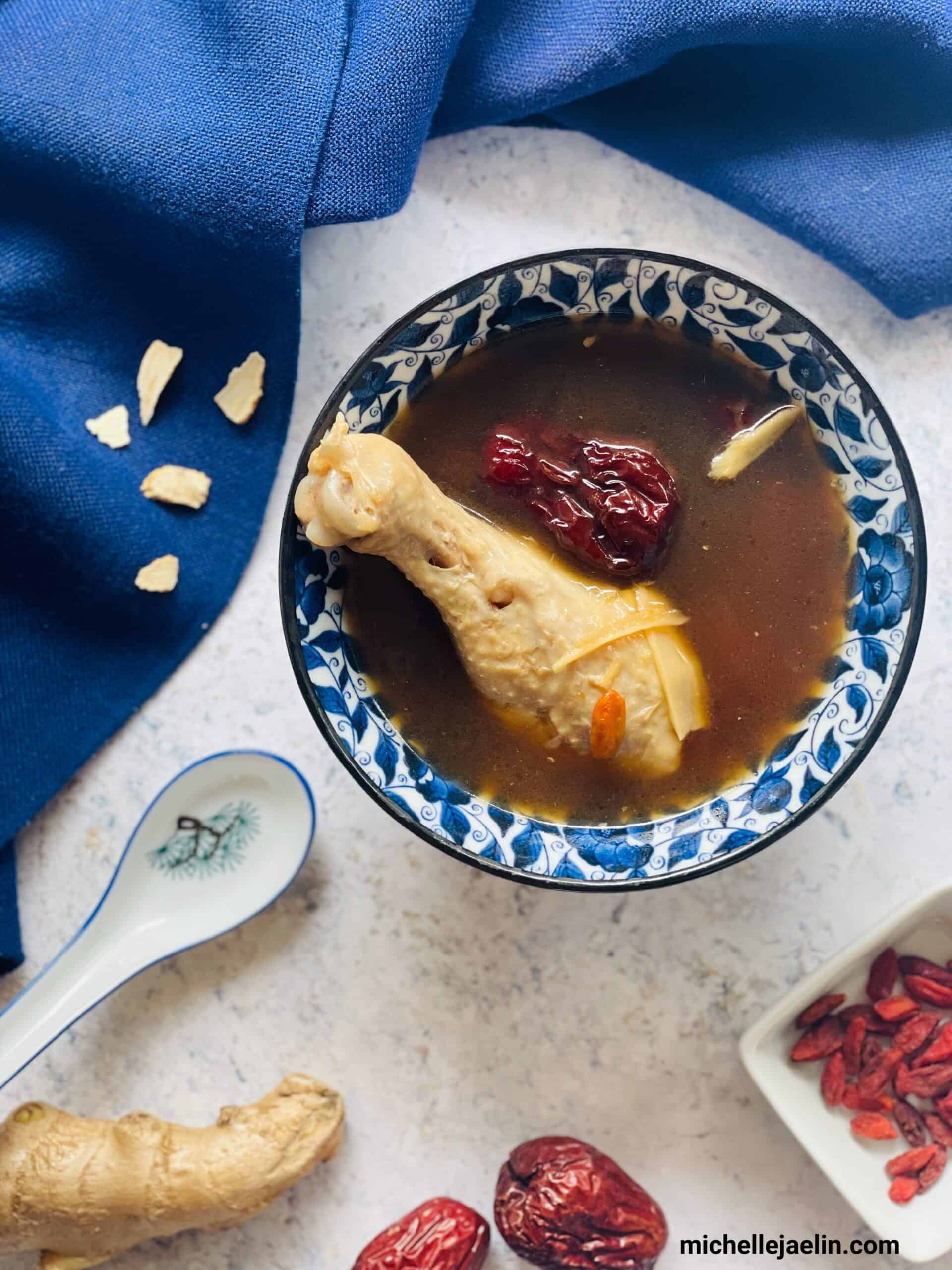
- Step 10: Remove from heat. Soup should be a reddish-brown color.
How long does Chinese Ginseng Chicken Soup Last?
3-4 days in the refrigerator when put in an airtight container. For longer storage, it can be frozen for several months.
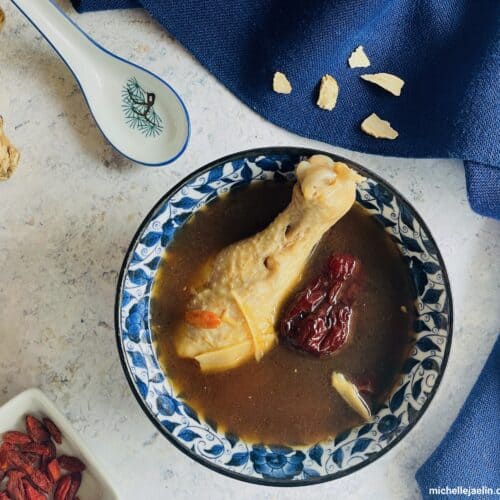
Chinese Ginseng Chicken Soup 花旗參雞湯
Equipment
- soup clay pot optional
Ingredients
- 2 chicken drumsticks
- 1 inch fresh ginger root sliced
- 1 Tbsp ginseng flakes approx 3 grams
- 4 Chinese red dates / jujubes
- 1 Tbsp Goji berries
- 1/2 tsp salt
Instructions
- Submerge chicken drumsticks in a pot of cold water. Bring water to a boil and boil for 4-5 mins. You want the impurities (foam and scum) to release from the chicken. Remove from heat, discard the water. Rinse the boiled chicken and pot to remove extra foam and scum.
- Using a Chinese clay pot (or the same pot from before), add the chicken and add 6 cups of water. Note at how the water from this step is much clearer than the previous step. Turn the heat to high and bring the soup to a boil.
- Add sliced ginger, ginseng flakes and red dates. Once the soup is boiling, turn the heat down to simmer for 1 hour.
- For the last 5 minutes of simmering time, add goji berries.
- Add salt to taste. Remove from heat. Soup will be a beautiful reddish brown color.
Video
Did you make this recipe? Post your recipe and tag @michellejaelin to share your creation! And don’t forget to follow along on Instagram, Pinterest, Facebook, TikTok and YouTube.
Other healthy Asian food recipes you might enjoy:



0 Comments